

James Abbott McNeill Whistler. 1834-1903.
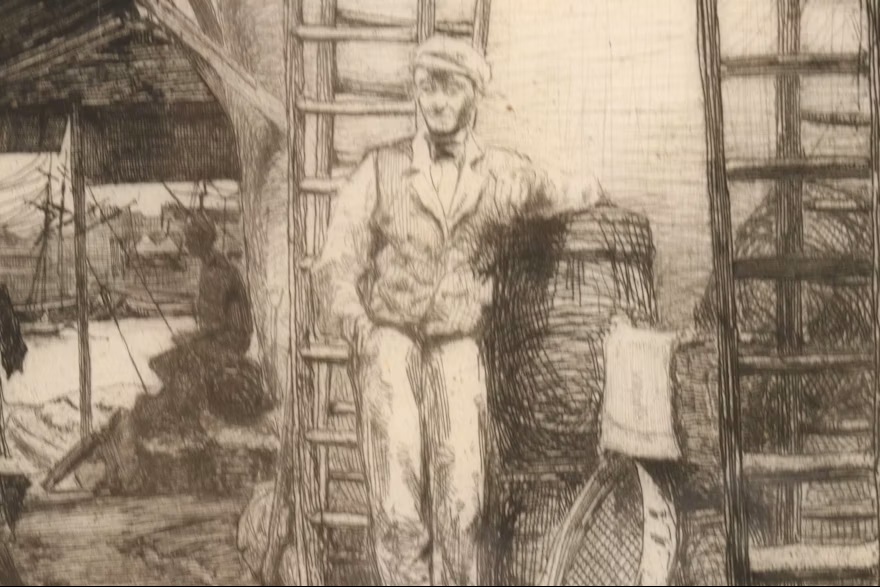
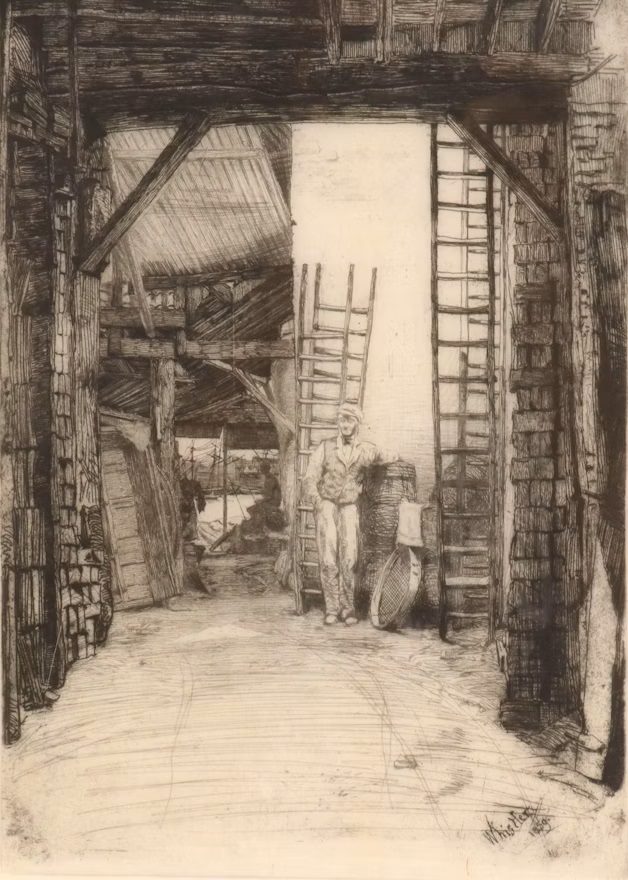
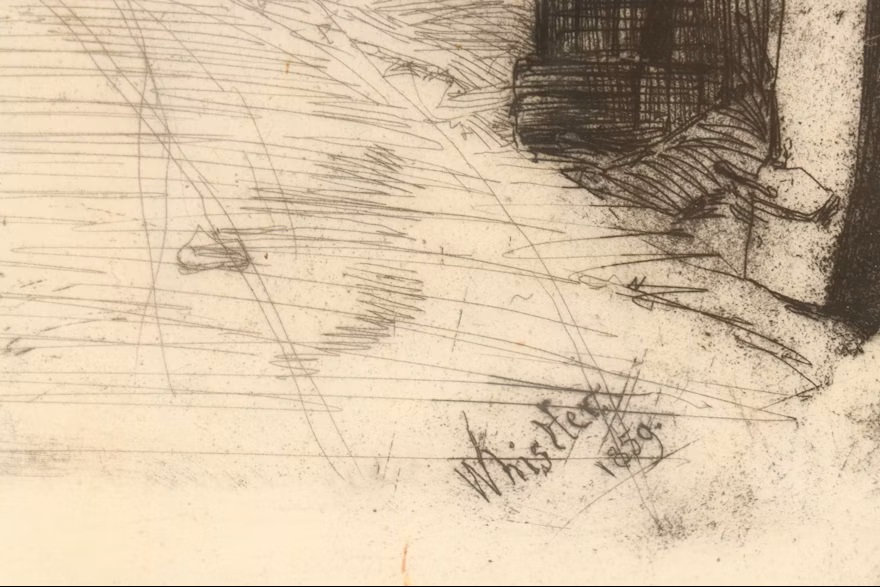
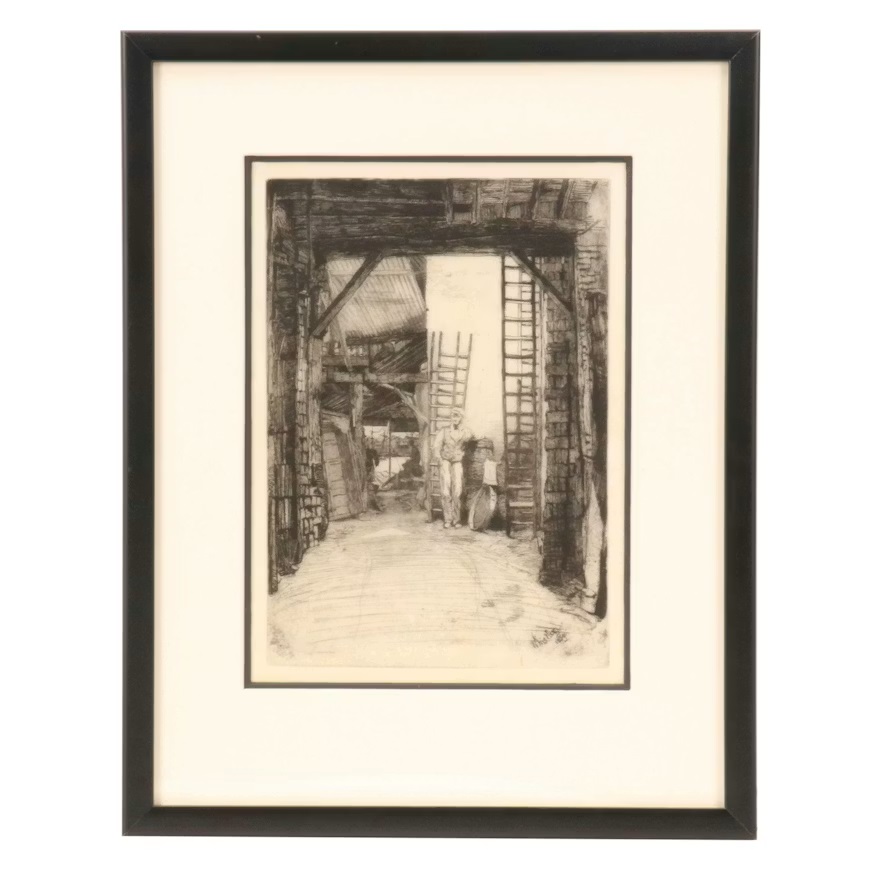
W. Jones, Lime-Burner, Thames Street. 1859. Etching and drypoint. Kennedy 46.ii; Glasgow 55.ii. 9 3/4 x 6 7/8 (sheet 10 15/16 x 7 5/16). Glasgow records 98 known impressions. Issued as plate 9 in "Sixteen Etchings or Scenes on the Thames and Other Subjects." (Thames Set). Illustrated: Print Collector's Quarterly 1 (1911): 35; Guichard, British Etchers, 1850-1940. A well-inked, cleanly wiped proof printed on antique cream laid paper; probably from the edition published by Ellis & Green in 1871. Signed and dated in the plate. Provenance: Pasquale Iannetti Art Galleries, Los Angeles. Housed in a 16.25 x 12.75 x 1.0inch black wood frame. $8,500.
In the Royal Academy Summer Exhibition of 1859, this etching was described as " W. Jones, lime-burner, Thames Street (943)."
The 'Whistler Etchings Project' at the Univesity of Glasgow notes the following: "Whistler made over thirty etchings in 1859, including many scenes on and by the river Thames in London, such as Thames Warehouses [46], Old Westminster Bridge [47], Limehouse [48], Black Lion Wharf [54], The Pool [49], Eagle Wharf [50], Thames Police [53], W. Jones, Lime-Burner, Thames Street [55] and Billingsgate [51]...
It is most likely that it was drawn in an inn or public house, or in a local 'ordinary' (a cheap restaurant) in the Rotherhithe or Wapping area, where Whistler was working on the 'Thames set' etchings. Rotherhithe [70] shows such a pub, the 'Angel' in Cherry Gardens, Rotherhithe.
'[Whistler] stayed for months at Wapping, to be near his subjects, ... Mr Ionides recalls long drives, down by the Tower and the London Docks to get to the place, as out of the way now as then. He says Whistler lived in a little inn, rather rough, frequented by skippers and bargees, close to Wapping steamboat pier....
"When his friends came," Mr Armstrong writes us, "they dined at an ordinary there used to be (sic). People who had business at the wharves in the neighbourhood dined there, and Jimmie's descriptions of the company were always humorous." Mr Ionides drove down once for a dinner-party Whistler gave at his inn: "The landlord and several bargee guests were invited. Du Maurier was there also, and after dinner we had songs and sentiments. Jimmie proposed the landlord's health - he felt flattered, but we were in fits of laughter." ' "
Lime was used for making building mortar. The lime burner had a thankless if important task, heating chalk in a kiln at 1,100C to make quicklime. The dust it produced could cause blindness and spontaneously combust and burn.
Please click on the link to the Glasgow online catalog raisonné W. Jones, Lime-Burner, Thames Street.
For more information or to be placed on the email list, send e-mail to Jane Allinson (jane@allinsongallery.com) or call +1 860 429 2322.